Why Installers Oversize Panels but Still Get Poor Charging
On paper, the system looks perfect: “We added more panels, so charging should be faster.”
In reality, the battery still crawls to 100%, or worse, never gets there. This is one of the most common frustrations in solar installations—and it’s not because solar doesn’t work. It’s because panel oversizing alone does not guarantee good charging.
Let’s break down the real reasons this happens, in plain language installers and system owners can actually use.
1. Panels Don’t Charge Batteries—Controllers Do
This is the biggest misunderstanding.
Solar panels only generate power.
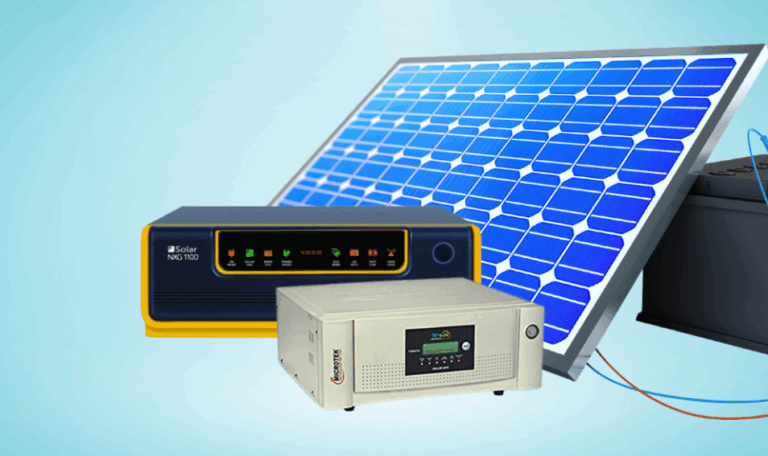
Charge controllers decide how much of that power enters the battery.
If your MPPT or PWM controller has:
- A lower current rating
- A lower PV voltage limit
- Or a capped charging power
…then adding more panels does nothing beyond that limit.
Example:
If your MPPT can only push 100A at 48V (~4.8kW), installing 8kW of panels won’t force 8kW into the battery. The controller will simply clip the extra power.
👉 Result: “We oversize panels but charging is still slow.”
2. Wrong Panel-to-Battery Voltage Matching
Many systems look oversized but are electrically mismatched.
Common mistakes:
- Too many panels in parallel (high current, low voltage)
- Too few panels in series (voltage too low to wake MPPT properly)
- Panels not reaching battery charging voltage early enough in the day
Lithium batteries especially need a stable and sufficient charging voltage. If your array voltage hovers too close to battery voltage, the MPPT cannot efficiently boost current.
👉 Result: The system looks big, but the battery sees weak charging.
3. Ignoring C-Rate Limits of the Battery
Batteries have charging limits, whether installers like it or not.
Every lithium battery has a maximum charge current or C-rate:
- 0.3C
- 0.5C
- 1C (rare for large banks)
If a 15kWh battery allows only 100A max charge, oversizing panels beyond what produces that current is pointless.
The battery will refuse extra current for safety and longevity.
👉 Result: Panels are available, sun is strong, but the battery throttles charging.
4. Load Is Eating the Solar Power
This one hurts, because it’s often ignored.
Many installers calculate charging as if:
“All solar power goes into the battery.”
In real life:
- Inverters are running
- ACs, fridges, pumps, and servers are ON
- Loads consume solar power before the battery sees anything
So yes, you oversized panels—but:
- 3kW is feeding loads
- Only 1kW is left for charging
👉 Result: Battery charges slowly even at noon.
5. Poor Installation Orientation and Heat Loss
Oversizing panels doesn’t fix bad physics.
Problems include:
- Panels facing wrong direction
- Low tilt angle
- Shading from tanks, parapets, or trees
- Roof heat causing thermal derating
High temperatures can reduce panel output by 10–20% easily.
So that “extra” panel capacity you added?
It’s being eaten by heat and shading.
👉 Result: Nameplate wattage ≠ real-world output.
6. Long Cable Runs and Undersized Wires
Power lost in cables never reaches the battery.
Common site issues:
- Long DC cable runs
- Thin PV cables
- Poor crimping
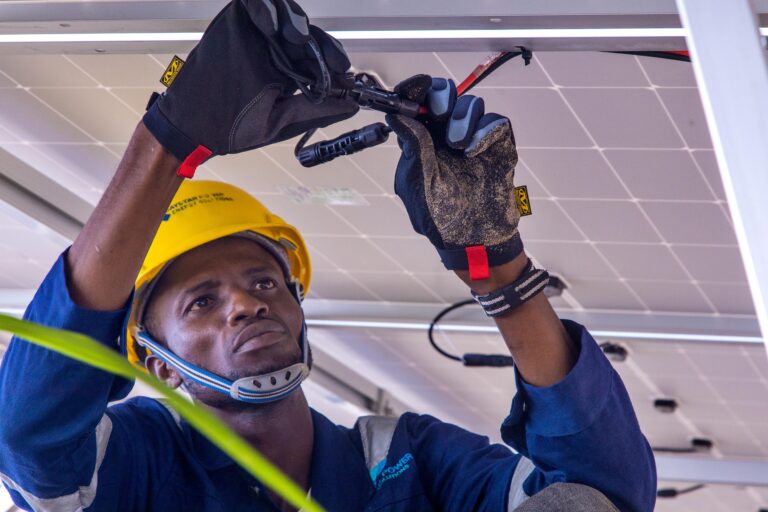
- Loose MC4 connectors
Voltage drop silently kills charging performance.
👉 Result: Panels generate power, but it dies before reaching the controller.
7. MPPT Configuration Errors
A painful truth: many systems fail because of settings, not hardware.
Examples:
- Wrong battery type selected
- Incorrect absorption voltage
- Float voltage too low
- Charging disabled or limited in firmware
Oversizing panels cannot fix bad configuration.
👉 Result: Battery never reaches proper absorption stage.
8. Marketing Math vs Engineering Math
Some installers oversize panels because:
- “More panels look professional”
- “Client believes bigger is better”
- “Competitors do it”
But engineering requires:
- Matching PV power to controller limits
- Matching controller output to battery acceptance
- Accounting for loads, seasons, and losses
Oversizing without design is just solar decoration.
The Truth Installers Must Accept
Good charging is not about:
❌ Panel quantity alone
❌ Sun brightness alone
❌ Battery size alone
It is about balance:
✔ Panels
✔ MPPT capacity
✔ Battery C-rate
✔ Load profile
✔ Wiring & configuration
Final Takeaway
If a system has oversized panels but poor charging, the problem is almost never “lack of solar.”
It is usually design ignorance, configuration error, or electrical bottleneck.
Before adding panels, always ask:
- Can my controller accept this power?
- Can my battery safely absorb it?
- Are loads stealing my energy?
- Is my wiring and voltage correct?
Fix those—and suddenly, the same panels will start charging like they should.