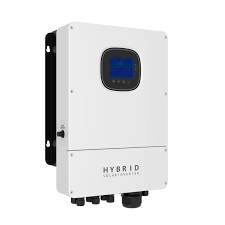
Why 6kVA Inverters Trip on Small Loads — Installer Mistakes Exposed
This is one of the most embarrassing situations an installer can face.
You install a 6kVA inverter.
The load is small — maybe:
- TV
- Fans
- Decoder
- Lights
And suddenly the client calls:
“Oga, the inverter just trips by itself.”
No AC.
No heavy appliance.
Yet the inverter keeps shutting down.
I’ve dealt with this exact issue many times, and let me say this clearly:
When a 6kVA inverter trips on small loads, the inverter is rarely the problem.
It’s almost always installer logic or system design mistakes.
Let’s expose them one by one.
Mistake #1: Assuming Inverter Rating Equals Real Power
Many installers hear 6kVA and assume:
“This inverter is strong. Small loads are nothing.”
That’s the first trap.
A 6kVA inverter typically delivers:
- 4.8kW real power (at 0.8 power factor)
Now here’s the real issue:
- Inverters regulate voltage, not wattage
- They respond to current stress, not just total load
So even a “small load” can create:
- High current draw
- Voltage instability
- Protection triggers
Especially if the system behind the inverter is weak.
Mistake #2: Weak or Incorrect Battery Configuration
This is the number one cause I see in the field.
A 6kVA inverter demands strong DC support.
If:
- Battery voltage drops suddenly
- Or battery current limit is exceeded
The inverter has only one option:
👉 Trip to protect itself
Common battery-side problems:
- Too few batteries in series
- Undersized lithium bank
- Low C-rate batteries
- Aging lead-acid batteries
- Poor parallel balance
Even with light AC loads, the inverter still:
- Draws current continuously
- Needs stable DC voltage
If the battery can’t provide that, the inverter panics.
Mistake #3: Ignoring C-Rate (Again)
Installers often think:
“C-rate is only for heavy loads.”
That’s wrong.
C-rate affects:
- Voltage stability
- Response to transient current
- How the inverter behaves during switching events
If a battery is rated:
- 0.3C or 0.5C
A 6kVA inverter can easily push it beyond comfort — even on small loads — when:
- Fridge compressor kicks in
- Inverter fans start
- Internal relays switch
- Load fluctuates slightly
Result?
- Battery voltage dips
- Inverter senses danger
- Trip occurs
The load looks small.
The current spike is not.
Mistake #4: DC Voltage Drop Installers Don’t Measure
This one is very common and very dangerous.
You may have:
- Correct cable size
- But long cable runs
- Poor terminations
- Loose lugs
- Cheap DC isolators
Voltage drop on the DC side causes:
- False low-battery detection
- Overcurrent compensation
- Inverter instability
And here’s the painful part:
The inverter trips even when the battery is still full.
Because it’s reacting to voltage at its terminals, not battery SOC.
Mistake #5: Poor Earthing and Floating Neutral
Many installers underestimate how sensitive modern inverters are.
Without proper:
- Earthing
- Neutral-earth bonding (where required)
The inverter:
- Detects abnormal reference voltage
- Misreads output conditions
- Trips randomly
This often shows up as:
- Tripping only at night
- Tripping only when few appliances are on
- Tripping without error codes that make sense
The load is not the problem.
The reference system is unstable.
Mistake #6: Inverter Idle Stress Misunderstood
Even with “small load”, the inverter is still:
- Switching DC to AC
- Regulating frequency
- Powering control boards
- Running internal fans
If the system has:
- Poor ventilation
- High ambient temperature
- Dust buildup
Internal temperature rises.
And once thermal thresholds are crossed:
👉 Trip
This surprises installers because:
“Nothing heavy is connected.”
But heat doesn’t care about load size alone.
Mistake #7: Small Loads With Bad Power Factor
Not all small loads are clean loads.
Devices like:
- Cheap TVs
- Decoders
- LED drivers
- Phone chargers
Can have:
- Poor power factor
- Harmonic distortion
- Spiky current draw
The inverter sees:
- Uneven current waveform
- Stress on output stage
- Protection triggers
So yes — small load, big headache.
Mistake #8: Generator or Grid Interaction Issues
For hybrid systems:
- Poor generator frequency
- Unstable grid voltage
- Bad changeover wiring
Can confuse the inverter logic.
The inverter may:
- Fail synchronization
- Detect unsafe input
- Trip even when load is minimal
Installers often blame firmware.
The real issue is input quality.
The Real Installer Fix (What Actually Stops This)
Here’s how I prevent this problem now:
✔ Match inverter size to battery power, not just capacity
Battery discharge capability must comfortably support inverter demand.
✔ Design DC side like it matters (because it does)
- Short cable runs
- Proper lugs
- Tight terminations
- Voltage drop checks
✔ Respect earthing rules
Good earthing prevents phantom faults and nuisance trips.
✔ Stop calling loads “small”
Every load has:
- Surge
- Harmonics
- Transient behavior
Design for reality.
Why I Stopped Guessing
After too many “everything looks fine” failures, I changed approach.
Using the Globisun Solar App, I can:
- Match inverter size to battery C-rate
- Check DC stability assumptions
- Balance load behavior realistically
- Avoid designs that trip under light usage
It helps me catch mistakes before installation, not after complaints.
Final Installer Truth
A 6kVA inverter tripping on small loads is not mysterious.
It’s a warning sign that something behind the inverter is weak or misunderstood.
Fix the system logic — and the trips stop.