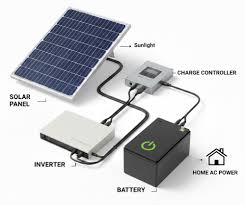
Stop Blaming Your Inverter — THIS Is the Real Problem
When most Nigerian homes experience solar problems — inverter tripping, battery draining, low backup, noise, or sudden shutdown — the first thing they blame is the inverter.
But in over 80% of cases, the inverter is NOT the real problem.
The true cause is usually hidden somewhere else in the system, slowly destroying performance until the inverter becomes the “scapegoat.”
Let’s break down the REAL reasons your inverter is failing… and how to fix them before you waste money replacing what’s not bad.
1. Your Batteries Are Too Weak (Or Already Dying)
Your inverter is only as powerful as the batteries behind it.
When batteries become weak:
- Inverter trips off at night
- Backup becomes short
- Fans and TV go off immediately
- Voltage drops
- Inverter starts “clicking” or switching frequently
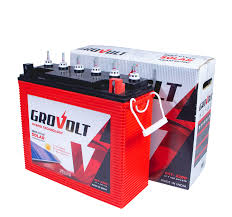
Why batteries weaken fast:
- Overloading the system
- Using cheap/unknown battery brands
- Wrong solar sizing calculations
- Not charging with enough solar panels
- Discharging the battery too deeply daily
If you’re unsure about the correct battery size you need, use a proper solar sizing tool like the Globisun Solar App
2. Your Solar Panels Are Not Enough
Most people install the wrong panel capacity.
Example:
You install 2 panels expecting them to fully charge 2 big batteries — it will NEVER happen.
Insufficient panel capacity leads to:
- Slow charging
- Batteries never reaching 100%
- Inverter tripping by night
- Overworking of batteries
Your panels must match your battery bank perfectly. Use a proper calculator like
Globisun Solar Sizing App to know exactly how many panels you need.
3. Your Load Is Bigger Than What Your System Can Carry
Another silent killer.
The average Nigerian loads their solar with:
- Fan
- TV
- Decoder
- Bulbs
- Laptop
- Phone charging
Then still adds:
- Freezer
- Water pump
- Iron
- Blender
- Electric cooker
💀 No inverter on earth will survive that.
When you exceed the inverter capacity:
- It trips instantly
- It overheats
- It starts humming
- It finally stops working
You’re not supposed to guess your load. Always do a proper load audit using Solar Sizing Calculator before adding any appliance.
4. Your House Wiring Is Wrong (This One Destroys Systems Quietly)
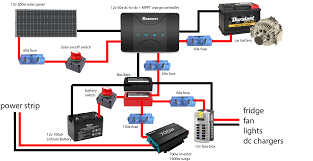
This is one of the BIGGEST causes of inverter failure in Nigeria.
Bad wiring causes:
- Power leakage
- Overload on one circuit
- Inverter overworking
- Sudden shutdown
- Low voltage warnings
Symptoms of bad solar wiring:
- Light flickers when inverter kicks in
- Some sockets carry more load than others
- Freezer and TV are on the same line
- Neutral and earth not properly separated
If your wiring is wrong, no inverter can save you.
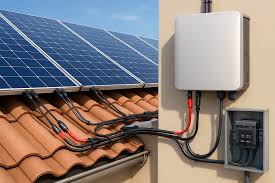
5. Your Installer Used Thin or Inferior Cables
Solar requires very thick cables because the current is high.
If the installer used cheap or thin wires:
- Heat builds up
- Voltage drop occurs
- Battery doesn’t charge fully
- Inverter senses low voltage and shuts down
Signs of bad cabling:
- Cables feel warm to touch
- Slow charging during the day
- Inverter trips during high load
6. Your Batteries Are Not Charging Fully
If your battery is not reaching 100% daily, it will fail in less than a year.
Why charging fails:
- Faulty charge controller
- Panels shaded or dirty
- Wrong panel arrangement
- Connecting panels in parallel when they should be in series
- Wrong MPPT settings
Many people think their battery is “bad,” but the real problem is poor charging.
7. You’re Discharging the Battery Too Much Every Night
If your battery regularly goes down to:
- 30%
- 20%
- 10%
…it is being killed slowly.
Lithium and AGM batteries hate deep discharge.
This shortens lifespan and causes tripping.
Proper solar sizing prevents deep discharge — calculate correctly using
Globisun Solar App
8. Your Charge Controller Is Faulty or Too Small
A weak or incorrect charge controller is another silent problem.
Symptoms:
- Panel is producing sun but battery doesn’t charge
- Inverter switches to battery too early
- Battery never reaches 100%
- System trips off anytime load increases
Many homes use a 20A controller for a system that needs 40A or 60A 😭
It will NEVER work properly.
9. Environment Issues You Never Considered
Things like:
- Dusty panels
- Panels installed under shade
- Wrong angle or orientation
- Bad roof installation
- Loose panel connections
All reduce solar performance, making it look like the inverter is weak.
The Simple Truth: Your Inverter Is Innocent 90% of the Time
Most times:
🔻 The inverter is not the failure point
🔻 The inverter is only reacting to deeper system problems
🔻 Fixing the real issue restores full performance instantly
Before you replace your inverter, do this:
- Check battery health
- Check panel capacity
- Confirm your loads
- Test your charge controller
- Inspect cables and wiring
And ALWAYS do proper solar sizing using
Final Advice
Don’t rush to replace your inverter.
99% of inverter failures are caused by:
- Wrong system design
- Wrong solar sizing
- Wrong battery bank
- Wrong panel capacity
- Wrong wiring
When everything is sized correctly, even a small inverter will work perfectly for years