7 Things I Check Before I Trust a Solar Installation
Whenever I see a solar installation for the first time, I don’t start by asking:
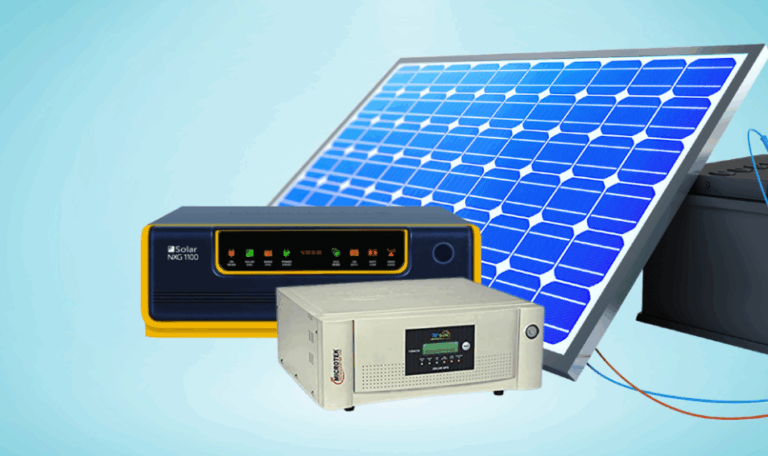
“Which brand of inverter is this?”
The brand can be good.
The panels can be good.
The battery can be expensive.
And the system can still be poorly designed.
What interests me is how everything comes together.
Because a solar installation is more than the equipment sitting on the wall.
There is a design behind it.
There is a calculation behind it.
There is protection behind it.
There is workmanship behind it.
And if any of those things are wrong, the system can give you problems regardless of how expensive the equipment was.
So when I inspect an installation, these are seven things I look at before I am comfortable saying:
“Yes, this looks like a properly thought-out system.”
1. I check whether the system actually matches the customer’s load
This is where I start.
I don’t care if someone tells me:
“It’s a 10kVA system.”
My next question is:
“10kVA for what?”
A solar system should be designed around what the customer actually wants to run.
I want to know the major loads.
I want to know which appliances can operate simultaneously.
I want to know which ones have motors or compressors.
I want to understand the expected daily usage.
And I want to know whether the customer wants backup for essential loads or wants to run practically everything in the building.
This matters because an inverter can be perfectly functional and still be completely wrong for the customer’s requirements.
I’ve seen people install a large-looking inverter and still have complaints because the battery and PV array weren’t designed around the actual energy demand.
So I don’t judge a solar system by the inverter sticker.
I judge it by what the system was designed to accomplish.
2. I check the battery and inverter relationship
This is one of the areas I pay close attention to.
An inverter and battery are not two independent boxes.
They have to work together.
If I see a large inverter connected to a relatively small battery bank, I immediately want to understand the design.
How much current can the battery supply?
What is the inverter expected to deliver?
What does the battery manufacturer specify?
Are there BMS limitations?
Is communication between the battery and inverter required?
Are the battery settings correct?
These questions become particularly important with lithium batteries.
A battery may have a large energy capacity but still have limits on how much current it can continuously deliver.
And if the battery’s BMS detects an unsafe operating condition, it may protect the battery by disconnecting.
So when someone tells me:
“It’s a 10kVA inverter, so it can carry 10kVA.”
I don’t stop there.
I want to know whether the entire battery system can support the intended load.
The inverter may be capable of delivering the power.
The battery still has to supply it.
3. I check the solar panel configuration, not just the number of panels
This is another area where I see mistakes.
Someone tells me:
“We installed 12 panels.”
Okay.
How are the 12 panels connected?
That is the more important question.
I want to know the panel specifications and how the strings were configured.
I check things such as:
- Voc
- Vmp
- Isc
- Imp
- Panel wattage
- Number of panels in each string
- Which MPPT each string is connected to
Then I compare that with the inverter’s specifications.
What is the maximum PV voltage?
What is the MPPT voltage range?
What is the maximum PV current?
What is the maximum PV power?
These numbers need to make sense together.
I also consider temperature because PV voltage changes with temperature.
So I don’t like the approach of:
“The inverter takes 6kW, and we have 6kW of panels, so we’re fine.”
The total wattage is only part of the PV design.
The voltage and current matter too.
A system can have what appears to be the correct amount of solar power and still have a poorly configured PV array.
4. I look at the cables and terminations
Cables don’t usually impress customers.
Nobody comes to a solar installation and says:
“Wow, look at those beautiful cables.”
But I look at them.
Because cables carry the current that makes the entire system work.
I want to see whether the cable sizes are appropriate for the current, cable length, installation conditions and allowable voltage drop.
Then I look at the terminations.
Are the terminals properly crimped?
Are connections tight?
Are cables properly supported?
Are positive and negative conductors routed appropriately?
Is there any sign of overheating?
Are the battery cables appropriate for the expected current?
This becomes especially important on the battery side of larger systems, where current can become very high.
A beautiful inverter room does not compensate for poor cable work.
5. I check the protection
This is one of the first things I notice when inspecting an installation.
Where is the protection?
Depending on the system design, I expect to see appropriate protection and isolation for the AC, DC and battery sides.
That can include things such as:
- DC isolators
- Fuses
- DC breakers
- AC breakers
- Surge protection
- Battery protection
- Appropriate earthing and bonding
The exact arrangement depends on the system.
I’m not looking for someone to install every possible protection device simply because it sounds impressive.
I’m looking for protection that is appropriate for the equipment and installation.
For example, I don’t want someone choosing a breaker just because:
“This is the size I normally use.”
The protection needs to make sense for the circuit and the equipment being protected.
That’s the difference between installing accessories and actually understanding electrical protection.
6. I check the physical environment
Sometimes the problem isn’t the electrical design.
It’s where the equipment was installed.
I look at the inverter location.
Is there adequate ventilation?
Is the equipment exposed to excessive heat?
Is it installed somewhere that makes maintenance difficult?
Is the battery sitting in an unsuitable environment?
Are cables exposed to unnecessary mechanical damage?
Are the panels securely mounted?
Is the mounting structure appropriate?
Does water have a path into places where it shouldn’t?
This matters particularly in our environment.
We have intense heat, dust, rain and sometimes very challenging installation conditions.
A component can have excellent specifications on paper, but the installation environment still matters.
I don’t want an inverter installed in a cramped, extremely hot space and then be surprised when it begins protecting itself under heavy load.
7. I ask the installer to explain the system
This is probably the most revealing test.
I can look at an installation and make observations.
But I also want to hear the person who designed it explain it.
I ask:
Why this inverter?
Why this battery capacity?
Why this number of panels?
Why this PV configuration?
Why these cable sizes?
Why this protection arrangement?
What can the customer run simultaneously?
What happens when the battery is low?
How long should the battery reasonably last under the agreed load?
Can the system be expanded?
I’m not looking for complicated vocabulary.
I’m looking for understanding.
A good installer should be able to explain the system in simple language.
If someone cannot explain why they made the decisions they made, that makes me uncomfortable.
And if the answer to every question is:
“That’s how we normally do it.”
I have even more questions.
There is something else I look for: consistency
One of the easiest ways to spot a poorly thought-out installation is when the components don’t make sense together.
You might see:
A large inverter with inadequate battery capacity.
A large battery with a PV array that struggles to recharge it.
A large PV array connected without proper consideration of voltage and current limits.
Heavy loads connected through inadequate cabling.
Expensive equipment with very basic protection.
A sophisticated lithium battery configured like a generic battery without reference to its specifications.
Each individual component might be good.
But the system as a whole doesn’t make sense.
That’s why I always say:
Good solar equipment does not automatically make a good solar system.
The components have to work together.
I also check whether the installation can be maintained
A system isn’t only installed for today.
Someone will eventually need to troubleshoot it.
Someone may need to replace a breaker.
Someone may need to inspect a cable.
Someone may need to check the battery.
Someone may need to service the inverter.
If everything is crammed together without thought, maintenance becomes unnecessarily difficult.
I like an installation where I can look at it and understand:
“This is the inverter.”
“This is the battery protection.”
“This is the PV isolation.”
“This is the AC protection.”
“These cables go here.”
“This is how the system is arranged.”
Good labelling and organisation aren’t just for appearance.
They make future troubleshooting easier.
What makes me trust an installation?
Interestingly, it isn’t perfection.
Even experienced installers can make mistakes.
What makes me trust an installation is that I can see evidence of thought behind it.
The load makes sense.
The inverter makes sense.
The battery makes sense.
The PV configuration makes sense.
The cables make sense.
The protection makes sense.
The physical installation makes sense.
And the installer can explain the decisions.
That’s what I’m looking for.
If you’re a customer, you don’t need to become an installer
I know some customers reading this may be thinking:
“How am I supposed to check all these things? I don’t understand solar.”
You don’t have to.
You can simply ask questions.
Ask your installer:
“How did you calculate my load?”
“Why did you choose this inverter?”
“Why this battery size?”
“How did you configure the panels?”
“What protection are you installing?”
“What backup time should I realistically expect?”
“What happens if I add another AC later?”
A competent installer should be able to explain.
You don’t need to know the answer beforehand.
You just need to listen to the explanation and see whether it makes sense.
And if you’re an installer, don’t take this personally
I’m not writing this to attack installers.
In fact, I think the industry needs more professional installers.
The point is that solar is becoming more popular, and more people are entering the industry.
Some have years of experience.
Some have electrical backgrounds.
Some have learnt through practical work.
Some are still learning.
There is nothing wrong with learning.
What becomes dangerous is pretending to understand something you don’t.
If you don’t know, check the manufacturer’s manual.
If you are unsure about a calculation, calculate it.
If you’re not sure about a configuration, verify it.
If an installation requires expertise beyond your competence, involve someone who has it.
Professionalism isn’t knowing everything.
It is knowing what you know, knowing what you don’t know, and refusing to gamble with someone else’s property.
My final test
After looking at a solar installation, I ask myself one simple question:
“Would I be comfortable putting my own money into this system?”
If the answer is yes, that’s a good sign.
If I find myself thinking:
“This should probably work…”
then I am not satisfied yet.
Solar isn’t supposed to be designed on “probably”.
The numbers should make sense.
The equipment should be compatible.
The protection should be appropriate.
The installation should be properly executed.
And the person responsible for the system should understand what they have built.
Because when everything is working, almost anyone can look like a good solar installer.
The real test is what happens when the system stops behaving normally.
That is when good design, proper installation and real understanding begin to matter.