Hidden Loads Installers Forget That Drain Batteries Overnight
As an installer, I’ve walked into dozens of systems that “should work” overnight — only to find batteries depleted by morning.
Clients complain:
“The battery was full last night, but in the morning it’s empty — we barely used anything!”
Most installers immediately blame bad batteries or inverters, but the truth is often much simpler: hidden loads.
If you don’t account for these small but persistent drains, no amount of kWh will make your system reliable overnight.
Step 1: What Are Hidden Loads?
Hidden loads are any continuous power draws that are not part of the main appliances you designed for.
Common examples:
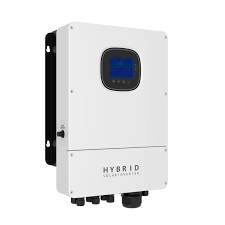
- Inverter standby consumption – Modern inverters can draw 10–50W just keeping their control circuits alive.
- Smart devices – Wi-Fi plugs, decoders, routers, solar monitoring systems.
- LED lights with sensors or smart controllers – They draw small current even when “off”.
- Battery BMS & cooling fans – Lithium batteries have active monitoring that consumes power.
- UPS-style AC outlets or relays – Even without a connected load, some AC outputs draw current.
Individually, each seems negligible, but cumulative over 10–12 hours overnight, it can drain several kWh.
Step 2: How Hidden Loads Affect Your Battery
Let’s assume a typical night:
- Inverter standby = 25W
- Router + decoder = 15W
- Battery BMS = 10W
- Misc. LED standby = 10W
Total hidden load = 60W
Over 12 hours:
- 60W × 12h = 720Wh (≈0.72kWh)
That’s just the hidden load — on a small 5–6kWh battery, this is more than 10% drained before the client turns on any major appliance.
Multiply by multiple devices and you can lose 1–2kWh overnight silently.
Step 3: Why Installers Overlook Hidden Loads
- Focus on visible loads only – Fans, AC, fridge, lights.
- Ignore inverter standby – Many assume “if the inverter is rated for load, it won’t consume power itself.” Wrong.
- Don’t measure overnight draw – Installers rarely test the system at 2–3 AM when hidden loads are active.
- Assume “small is negligible” – Over a night, small loads are not negligible.
Step 4: Real-Life Example From the Field
I once sized a system for a small home:
- 3 fans + 1 fridge + 1.5HP AC → total overnight load = 1.5kWh
- Battery = 5kWh lithium → theoretically plenty
Result: Battery was 50% depleted by morning
After investigation, I found:
- Inverter standby = 25W
- Router + TV decoder = 25W
- Battery BMS = 10W
- LED lighting = 10W
Hidden load = 70W × 12h = 0.84kWh
Without accounting for this, my “safe overnight design” failed silently.
Step 5: How to Account for Hidden Loads
1️⃣ Measure actual standby consumption
- Use a clamp meter or energy monitor
- Record overnight draw without major appliances running
2️⃣ Include it in battery sizing
- Example: Overnight load = 1.5kWh
- Hidden load = 0.84kWh
- Total = 2.34kWh
- Apply depth of discharge (80%) → battery required ≈ 2.9kWh
3️⃣ Choose inverter wisely
- Some inverters have high standby losses
- Pick low standby models if overnight reliability is critical
4️⃣ Optimize hidden loads
- Turn off unnecessary smart devices at night
- Use low-power UPS or sleep modes for routers
- Check LED sensors and timers for phantom draws
Step 6: Installer Truth About Overnight Failures
Batteries aren’t failing overnight — hidden loads are quietly stealing energy.
If you ignore this:
- Clients get frustrated
- Batteries seem weak
- Installer reputation suffers
The solution is simple: measure, account, and optimize.
Step 7: Tools That Make This Easy
I use the Globisun Solar App to:
- Calculate all hidden and visible loads
- Factor in inverter standby consumption
- Adjust battery sizing and depth of discharge
- Design systems that last overnight reliably
With this approach, you stop guessing and start delivering systems that actually perform.